Department of Defense Birding Challenge
While I was working for Army Headquarters the last nearly 16 years, I became involved in the Department of Defense – Partners in Flight Program (DoD PIF). As the Chief of the Branch that supported the program, I also was able to contribute over the course of that time. A fun activity that was conceived by members across the Army bird conservation community was this DoD Birding Challenge… why not make work fun?
So, after retiring, I continue to participate in this “birding contest”. My trip counts and any other birding I accomplish are reflected monthly in the contest submission. Though I do not live in a “hotspot” for birds where diversity is busting at the seams like southern Arizona or California, I do have a time advantage over some still employed. In any case, it allows me to stay in touch with my birding counterparts across the Army. My count totals are:
- January – 84 species.
- February – 97 species.
- March – 111 species.
- April – 167 species.
- May – 204 species.
- June – 137 species.
- July – 129 species.
As migration comes and goes, you will see the numbers rise and fall across the year. Check out my past trips linked below for more birding details.
The Big Trip: Costa Rica
In March of 2026, I was able to travel to Costa Rica (CR) with 10 others from the Howard County Bird Club in Maryland. Some very excited birders, photographers, and nature lovers in general were setting out on an annual trip to see tropical environments, nature, and animals found nowhere else.
Of course, the first thing one notices when you step outside the airport is the warmth and humidity, but the birding began right away. San Jose, CR was a beautiful city, and we departed after meeting our guide, Erick Guzman, and our tour bus driver, Alberto.
Most of the trip was spent in the highland oak forest, mid-elevation cloud forest, and lowland tropical rainforest habitats. Moving across the CR “continental divide” was memorable. Ecologically, birds are somewhat different on the Caribbean side from those on the Pacific side. So, CR presented quite a variety of species. In addition, migrating birds were also moving through on their way to northern US and Canada. I thought it very fun to see Scarlet Tanagers in CR, about 4 weeks before they arrive here in Howard County.
This trip exceeded all expectations. The group managed to list about 315 species of birds, of which I saw 303. But the group was likely in the high 90th percentile for seeing everything that was found. We took evening walks to spy on frogs and other night critters… being careful to stay on paths so we didn’t accidentally encounter venomous snakes or curious jaguars. We took in the various moths and butterflies of the area, and witnessed some great mammals also like Sloths, Howler Monkeys, Kinkajou, and CR River Otters. We also shared a bridge over a river with a very polite Coati. Our familiar Racoon was also seen.
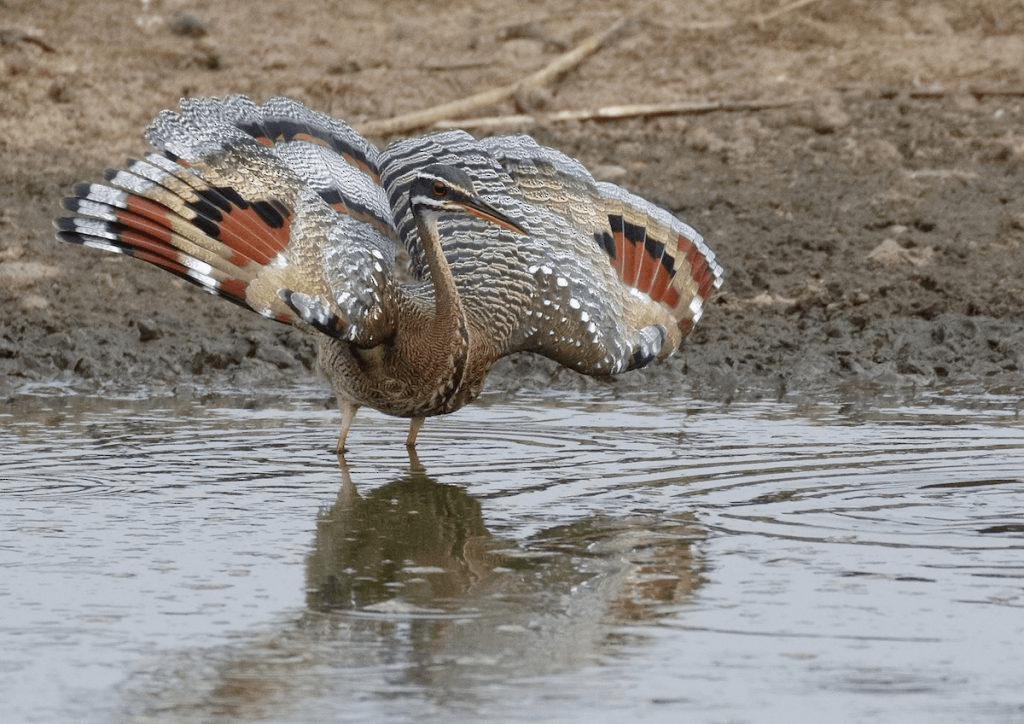
But the birds were definitely the main event, and they did not disappoint. Some of the birds seen included threatened Great Green Macaw and Scarlet Macaws. We saw twenty-seven species of Hummingbirds of the total 52 species in Costa Rica, including Lesser Violet-Ear, and Snowcap. We also saw twelve species of pigeons and doves including Band-Tailed Pigeon and Ruddy Ground Dove; twelve species of Tanagers including Spangle-Cheeked, Scarlet, Bay-Headed, Golden-Hooded, and Emerald; and four species of sweet singing Nightingale-Thrushes. There were also over 30 species of flycatcher-like birds including Black Phoebe, Torrent Tyrannulet, and Black-Capped Flycatcher. Birds of prey were also seen including the Bat Falcon, Gray Hawk, and Double-Toothed Kite. Uniquely tropical birds like Motmots, Trogons, and Sunbittern were also seen.
The main attraction for many in CR, the Resplendent Quetzal, was also abundant. There is no way to summarize over 315 species of birds, and there is no way to convey the sheer fascination of a group of birders thrust into the CR rainforest for 12 days except to say it was the experience of a lifetime.